Dispatch seems aimed at fifteen-year-old boys. Characters say "fuck." A lot. They think only of sex, sulk at bars to blow off steam, and have the communication skills of, well, fifteen-year-old boys. There's an uptight blonde and a manic pixie bad bitch to choose between. There are big butts and bare boobs. There's a band of misfits that learns to work together, a grizzled veteran that teaches them, and a villain with roughly five minutes of screen time. To call Dispatch a grab-bag of sophomoric tropes and horndoggery would be an understatement.
Oh, and the gameplay? It's buns. Filler between story beats.
But I still had fun with Dispatch. It was fun to embrace the edgy and the horny, to hear Aaron Paul make a meal out of another VA gig ("Hooray!"). It was fun to soak in the gorgeous animation, to watch for the directorial flourishes propping up the flimsy script. It was fun to "be there," to have my expectations managed by first impressions and not by comprehensive reviews. But the novelty is gone. And as a known quantity, Dispatch is far less exciting.
To give the briefest of briefings, Dispatch is a superhero workplace comedy. Robert, the protagonist, is an Iron Man-adjacent ex-superhero who is hired to manage a team of reformed supervillains and send them out on calls. "Gameplay" consists of matching calls with the team member whose stats are most appropriate (picking someone fast to evacuate people from a burning building, e.g.). Players choose between dialogue options to shape and further the story.

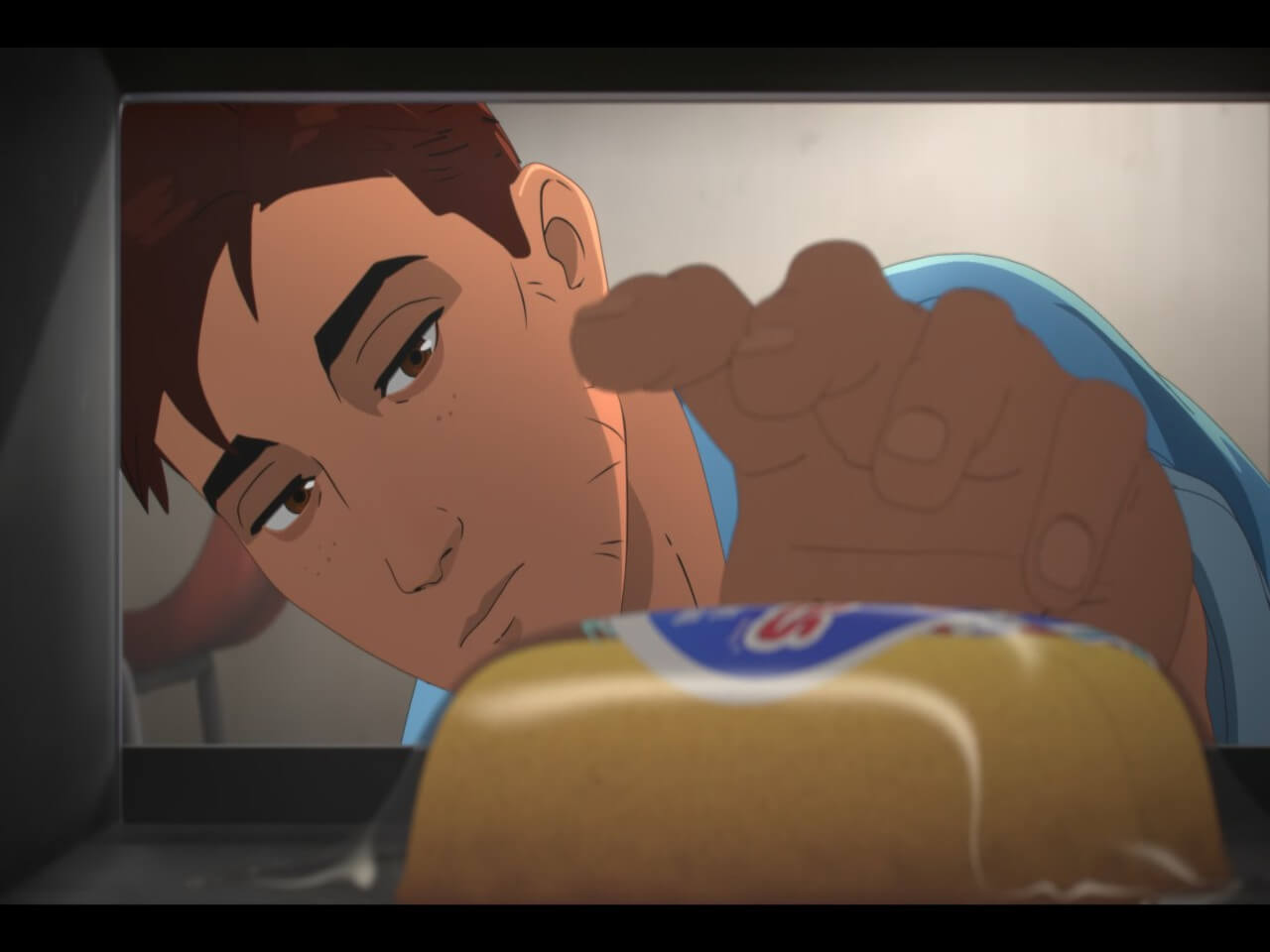
Riveting.
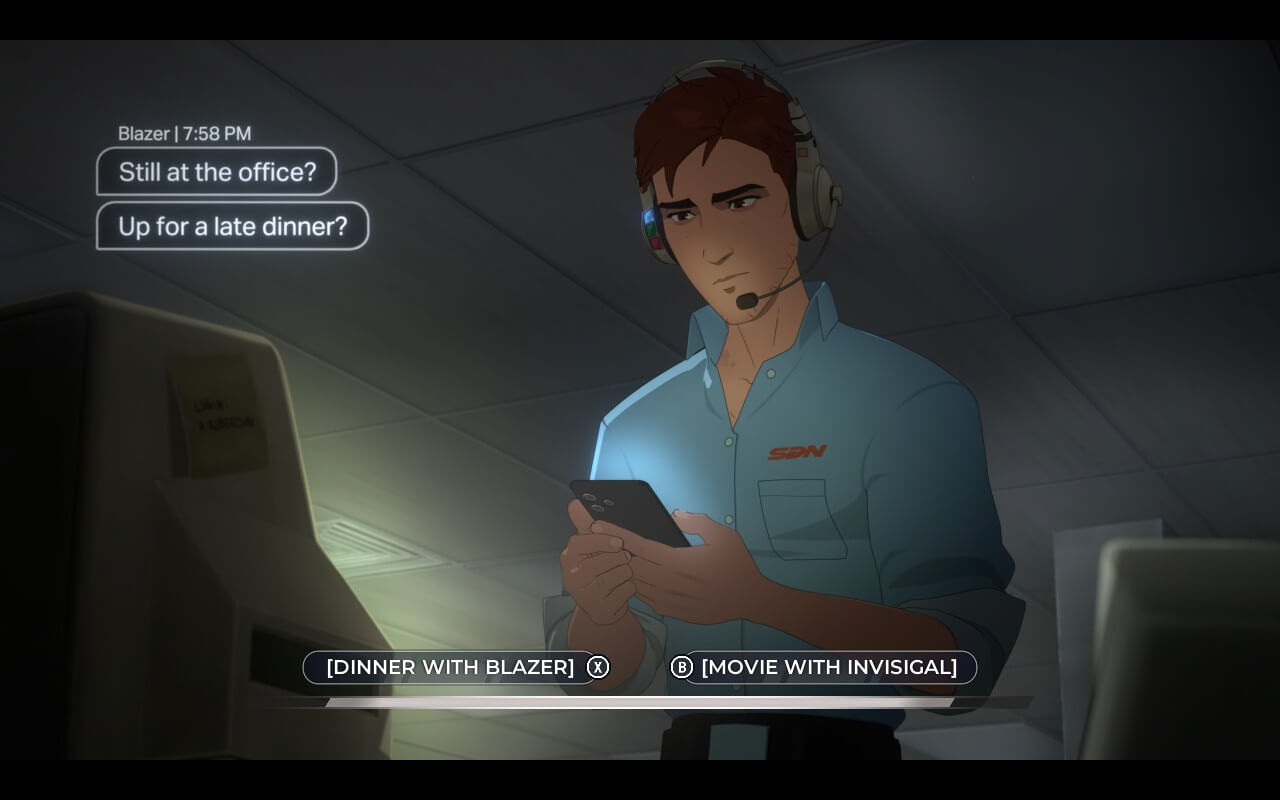
A big sticking point for me with this style of choice-driven, dialogue-heavy game is the idea of "possibility space." Do my dialogue choices feel weighty, like they'll cascade into new scenes, alternate endings, or hidden character moments? That's possibility space, and it's something that Dispatch consistently nails at a micro level: you envision the branching paths behind each dialogue option, your chest tightens as the timer menacingly ticks down, forcing you to choose, and the pressure releases as the characters in your orbit take note of your decision. Each choice is a venture into the unknown, and with that comes the hope that some gripping development is just around the corner.
Titillating.
The same can be said of the episodic release schedule. I was let down by most of Dispatch, waiting for a deepening of themes and a crystallization of characters. But with each episode drop, there was the same hope that next week would see the gameplay evolve into something meaty and the juvenility into something meaningful. That week never came. The writing remained as frustrating as ever.
***HEAVY SPOILERS FOLLOW***
Dispatch's big "twist" is that Invisigal, the aforementioned "manic pixie bad bitch," is a double agent sent to seduce Robert and steal his mech suit's power source. Fair enough. Then the incessant raunchiness, the sexual tension, it means something, right? It's all part of the psyop? Wrong. In episode three—before any of this information comes to light, mind you—Invisigal dreams that she's making love to Robert. The scene leaves little to the imagination. It's such a waste! Sex is a powerful storytelling tool: trusting, vulnerable, sometimes impulsive. For the writers to blow their load (heh) on a dream sequence in a story of seduction and betrayal—confusing the narrative in the process (Does she love Robert? Isn't that ending-dependent?)—is the definition of "gratuitous."
"Don't be such a prude!", the straw men say. To which I counter that it's not prudish to know that the difference between art and pornography is intent. And I have to ask myself, what's the intent of a game that sells a swimsuit special as DLC?
So yeah, Dispatch was fun. Like junk food. Brightly packaged, unsubstantial, and appealing to the child within—the fifteen-year-old child.