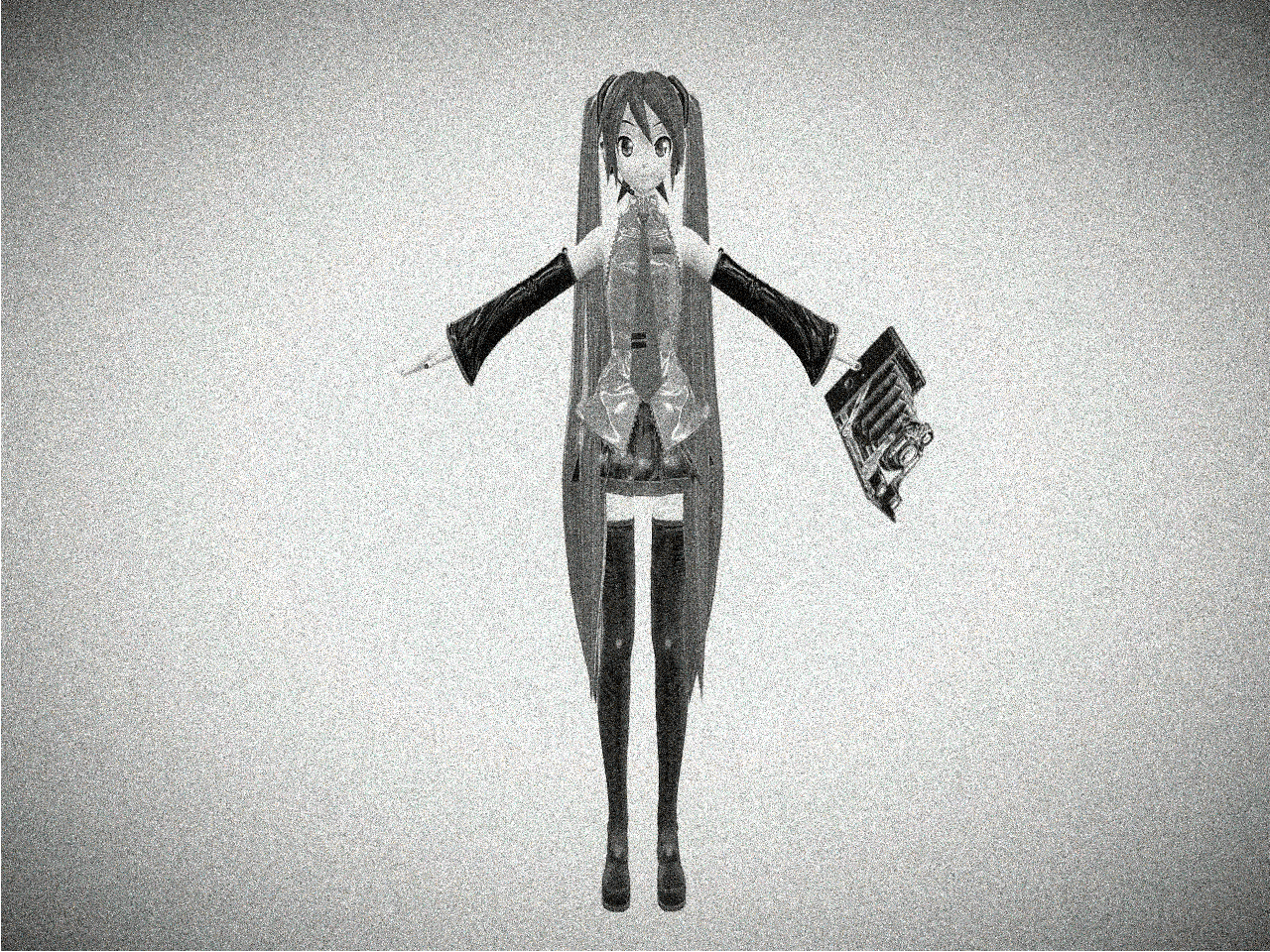
Since entering the third dimension, the survival horror genre has tried time and again to answer one critical question: what should be done with the camera? Fatal Frame—in which you, Miku Hinasaki, explore a haunted mansion in search of your brother—responds by equipping the protagonist with a diegetic camera, allowing for a perspective shift that marries the game's mechanical ambitions with the genre's narrative conventions.
With regards to the non-diegetic camera, Fatal Frame locks the player's perspective to fixed angles; move to the boundaries of the current view, and the perspective will shift. This camera system preserves a tension in every room, an air of mystery in that an enemy can be out of view without necessarily being out of reach. The genius of Fatal Frame, then, is that using the diegetic camera changes your perspective to a first-person view, piercing through the aforementioned mystery and recontextualizing the game's combat encounters.
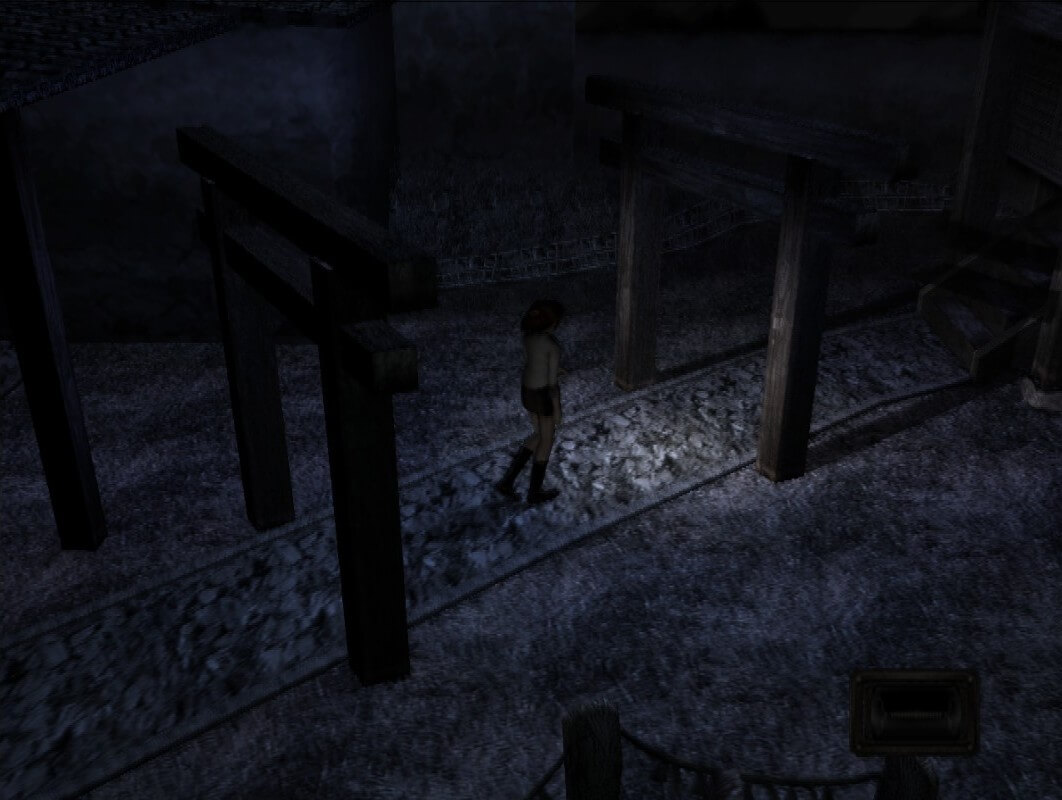
Fatal Frame uses Shintoism to anchor its horror in the real world,
much like Resident Evil uses Big Pharma.
And of combat encounters—which pit you and your Kodak* against the mansion's spirits—, there are plenty. Resident Evil, the survival horror game to popularize the genre, locked zombies to certain hallways and rooms with the expectation that players would easily outrun their languid shambling. That's not as viable an option in Fatal Frame. Ghosts, true to their incorporeal form, will chase you through walls, forcing you to at some point stand your ground and take some pics.
Yet the controls don't make that an easy task. Sure, you use the left stick to walk around, like in every other game. But when you enter first-person view with your camera, it's now the right stick that controls character movement, while the left stick allows you to adjust your shot.
In practice, you are switching between perspectives and sticks constantly: coming to a halt to plant your feet and pull out your camera (move with left), getting in a few snaps of the specter while repositioning as needed (move with right), and running away before rinsing and repeating (move with left).
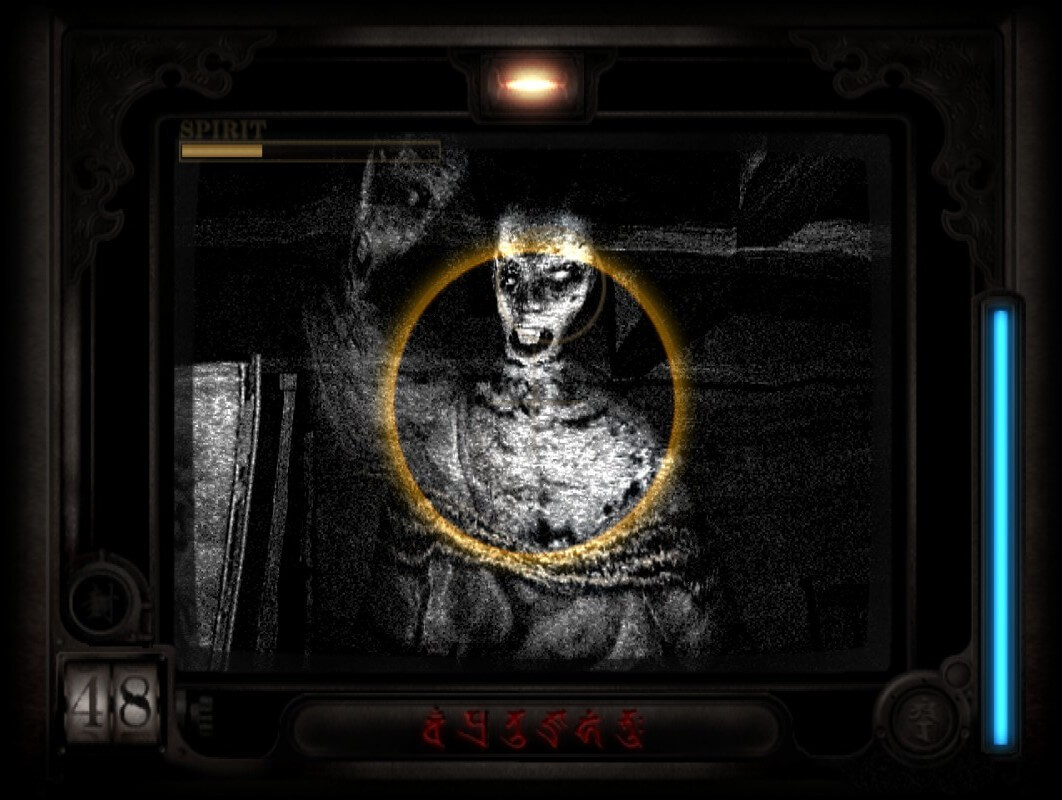
I couldn't center the late-game ghosts and take a screenshot simultaneously (they're so fast!), so here's the first ghost encounter of the game.
It's unwieldy, at first, and counterintuitive to decades-old gaming habits. But looking past the unconventionality, it's remarkable as mechanical and narrative cohesion made manifest—the player's insecurities mirror the protagonist's!
You've seen the movie: after faltering in her early encounters with The Big Bad, The Final Girl regains her confidence, steels her nerves, and takes the villain down in a cathartic display of badassery. And that's the progression curve of Fatal Frame for both the player and the protagonist—short bursts of awkward, counterintuitive controls and perspective shifts make early encounters more harrowing, but they give way to a sense of mastery (or at least competence) by the end of a six-hour playthrough.
By demanding that you see through Miku's eyes, the game molds you BOTH into The Final Girl.
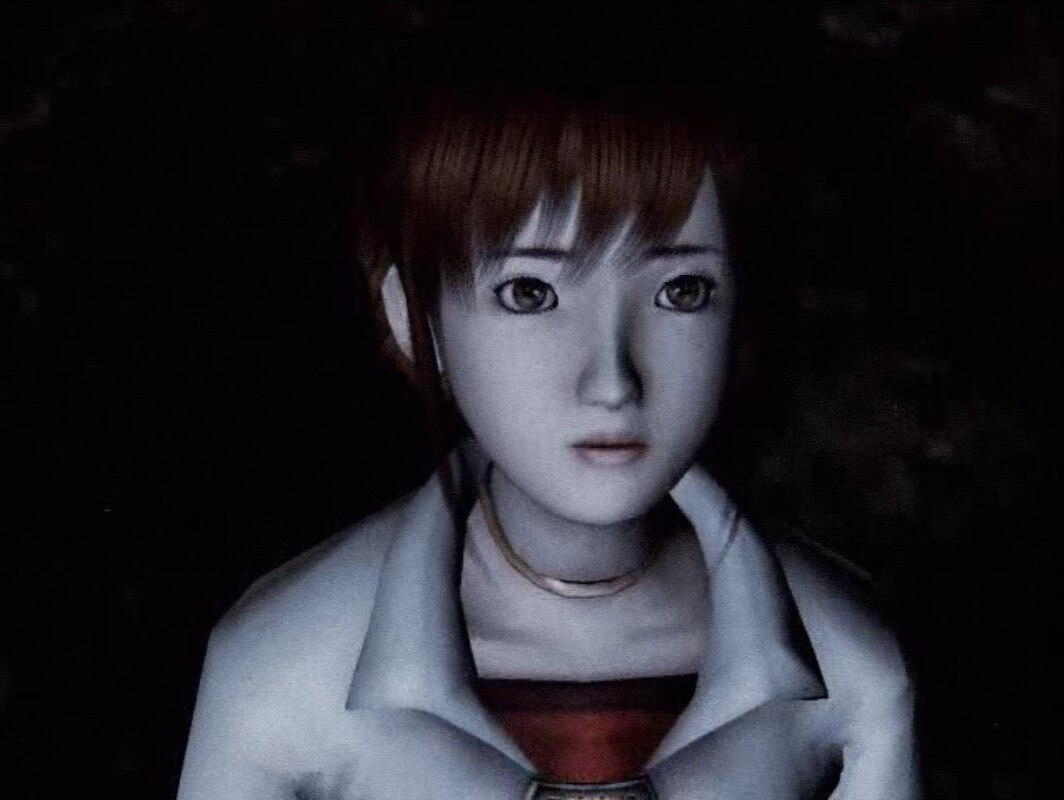
That Miku is a civilian normie (unlike Resident Evil's Jill Valentine, e.g.) further bolsters the arc of The Final Girl.
I was blown away by Fatal Frame; I haven't even touched on its best-in-class level design or layered storytelling (delivered with as much camp as possible, of course). But those features only enhance a fundamentally sound experience that understands the survival horror genre on both a mechanical and narrative level.
What should be done with the camera? Fatal Frame answers this perennial question by distinguishing between fixed and first-person perspectives, the effect of which is mirrored, Final Girl-esque progression curves for both the player and Miku alike. Over 20 years later, it's a solution that remains as fresh as ever.
*It's not actually a Kodak; I just got tired of the word "camera." Here's an interesting (if dubious) developer interview that discusses the aesthetic inspirations for the diegetic camera.